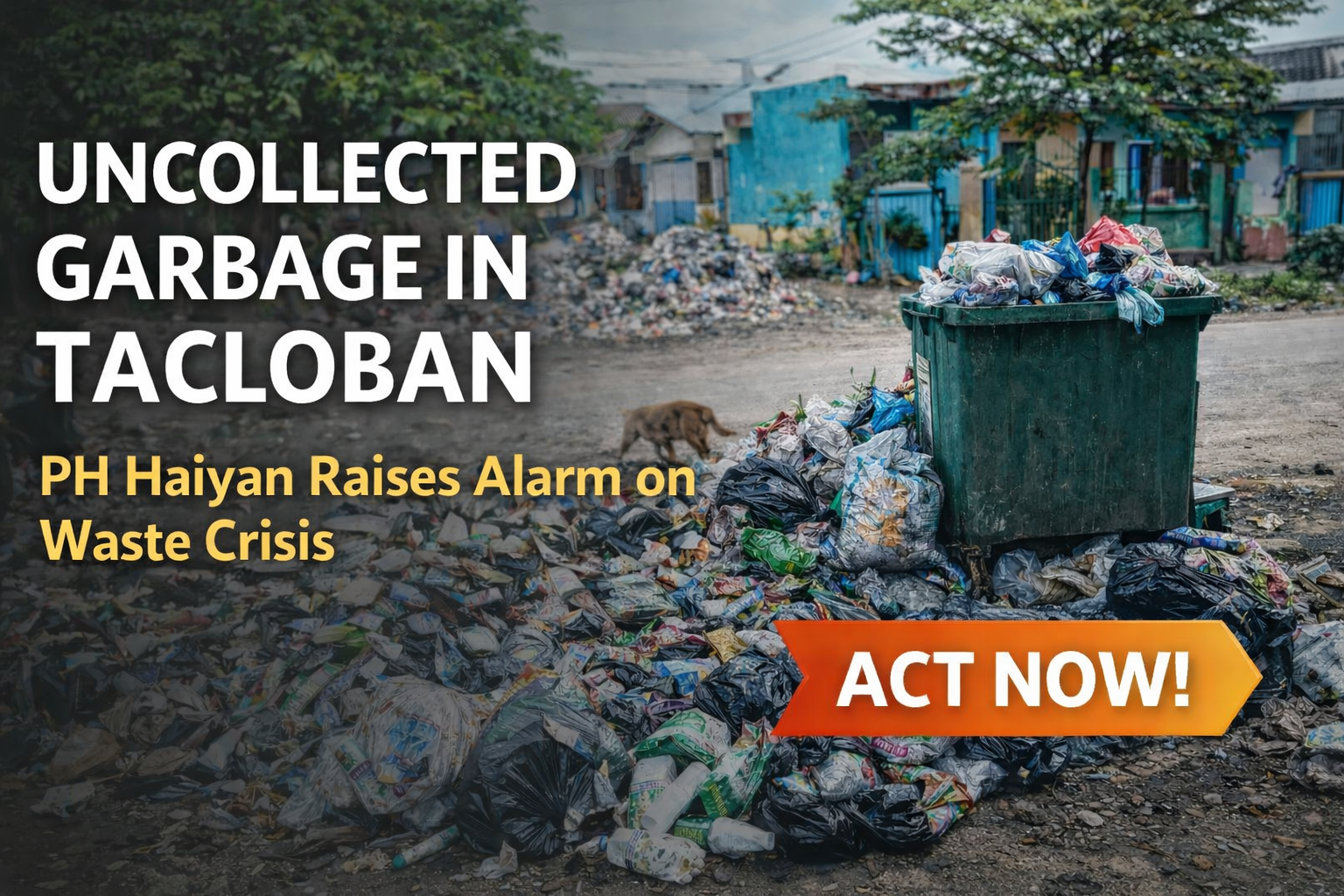
Tacloban City — January 27, 2026. PH Haiyan Advocacy, Inc., a climate and environmental advocacy group rooted in Eastern Visayas and formed by survivors of Super Typhoon Yolanda (Haiyan), has formally written to the City Government of Tacloban to raise urgent concerns over the persistent problem of uncollected garbage in several areas of the city.
In a letter addressed to City Mayor Alfred S. Romualdez, PH Haiyan expressed deep concern over reports and documented images of accumulated solid waste along inner roads, side streets, and residential areas—many of which have circulated widely on social media. According to the organization, these conditions are not only alarming but also inconsistent with Tacloban’s status as a Highly Urbanized City for the past seventeen (17) years.
A Public Health, Environmental, and Disaster Risk Issue
PH Haiyan emphasized that the accumulation of garbage goes beyond aesthetics. Uncollected solid waste poses serious risks to public health, environmental safety, drainage systems, and disaster preparedness, especially given Tacloban City’s vulnerability to flooding and extreme weather events.
“As a city that has endured the devastating impacts of storm surge and flooding, we cannot afford to ignore issues that worsen disaster risks,” the group noted. Clogged waterways and unmanaged waste increase the likelihood of flooding and the spread of disease—threatening lives, livelihoods, and community safety.
Clear Legal Mandates, Apparent Gaps in Enforcement
In its communication, PH Haiyan reminded the City Government that the responsibility for solid waste management is clearly defined under existing laws and ordinances, including:
- Republic Act No. 9003 (Ecological Solid Waste Management Act of 2000), which assigns primary responsibility to local government units;
- DENR Administrative Order No. 2001-34, which reinforces LGU accountability in implementation and enforcement;
- Republic Act No. 7160 (Local Government Code), which obligates cities to protect public health and ensure environmental sanitation; and
- Tacloban City Ordinance No. 2017-13-37, which provides for an integrated ecological solid waste management system, including collection schedules, facilities, funding, and enforcement mechanisms.
Despite these clear mandates, PH Haiyan pointed out that conditions on the ground suggest possible lapses in implementation, supervision, or enforcement of the city’s solid waste management system.
What PH Haiyan Is Asking For
In the interest of transparency, accountability, and good governance, PH Haiyan respectfully called on the City Government to:
- Conduct a prompt fact-finding review or internal investigation through the appropriate city offices to determine any deficiencies in garbage collection and management;
- Evaluate the organizational structure, designations, and qualifications of personnel responsible for solid waste management, including compliance with training and competency requirements;
- Undertake immediate remedial measures to clear accumulated garbage and prevent further risks to public health and safety;
- Ensure strict enforcement of collection schedules and coverage under the existing city ordinance; and
- Inform the public in writing of the findings and corrective actions within fifteen (15) days, consistent with the principles of transparency and accountability in public service.
A Call Made Out of Love for Tacloban
PH Haiyan stressed that the appeal is not adversarial, but grounded in civic pride and concern for the city’s long-term well-being.
“This concern arises out of love for Tacloban City and a sincere desire to see it reflect the standards befitting a Highly Urbanized City—where cleanliness, environmental responsibility, and responsive governance are visibly upheld,” the organization stated.
As Tacloban continues its journey of recovery, growth, and climate resilience more than a decade after Yolanda, PH Haiyan reiterated that effective solid waste management is not optional—it is a fundamental public service essential to health, safety, disaster preparedness, and the dignity of every Taclobanon.